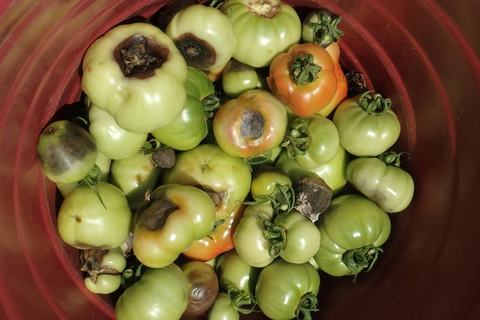
This is caused by a lack of calcium in the developing fruit. Maintaining consistent soil moisture often alleviates this problem. Maintaining a pH of 6.5-6.8 and supplementing calcium chloride foliar sprays in the early morning when symptoms first appear are additional best practices.
Tomato Problems?
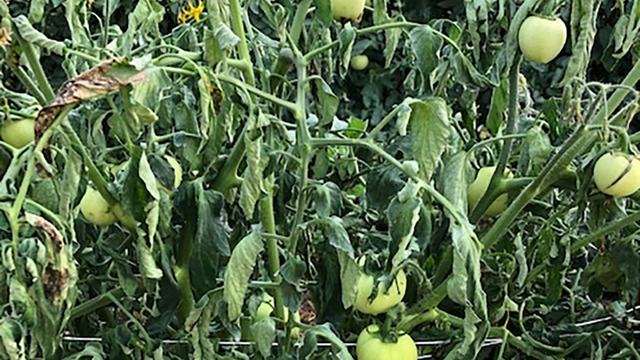
Common Phisological Issues
Blossom End Rot
Fruit Cracking & Splitting
Splitting and cracking fruit is common when we have rapid changes in soil moisture. Heavy summer rains that follow dry spells create the conditions for this problem. It is best to harvest fruit to ripen off of the vine, do not consume these fruits if you see leaking from the split or smell a foul odor.
Zippering
Brown zipper-like scars sometimes appear on tomatoes. This disorder happens when the flower anther sticks to the developing fruit as it grows. Some varieties are more prone to zippering than others. Open holes and multiple scars are not uncommon to find with this disorder. The affected fruit is fine to consume.
Local Plant Clinic
This spring we trained Extension Master Gardener℠ volunteers on tomato disease diagnostics. As warm wet weather sets in it is paramount for gardeners to correctly identify diseases on their plants so that they are able to take the appropriate actions. Our trained volunteers and Extension staff are equipped to utilize specific test kits to help discern what issues you may be encountering this summer. Plant clinics have been established to run in conjunction with monthly library programs for disease diagnostics. Outside of these times samples can be brought to our office location open Mon-Fri 8:00am- 5:00pm in Dallas. While we have emphasised tomato diagnostics this year our staff and volunteers are trained to assist gardeners in diagnosing issues beyond tomatoes.
Gaston County Library Plant Clinic Dates
May 30th: 12:00pm-2:00pm
June 27th: 12:00pm-2:00pm
July 25th: 12:00pm-2:00pm
August 22nd: 12:00pm-2:00pm
September 26th: 12:00pm-2:00pm
October 31st: 12:00pm-2:00pm
Diagnostic Testing Kits Available
- Bacterial Spot (Xanthomonas)
- Bacterial Speck (Pseudomonas syringae pv. tomato)
- Bacterial Wilt of Tomato (Ralstonia solanacearum)
- Tomato Spotted Wilt Virus (Orthotospovirus tomatomaculae)
Join our mailing list!
Enter your email address to receive updates.
Written By

More About